Staying Connected
Last year, I completed my 27th and final interview for the Crosley Quarterly’s “Captivated by Crosleys” feature. The initial goal of this feature was to highlight “regular” owners, not necessarily those everyone knew, but everyday owners, some with long-term life “afflictions” with Crosleys to those who were relatively recent arrivals to the Crosley world. Male/Female, young/old - all provided incredible insights, differences and even commonalities about the Crosley brand. It gave me an honored glimpse of the past through this diverse group while sometimes offering me a slight glimmer of our Crosley and car collector future.
The responsibility of documenting many personal and family histories was ever-humbling. Did I get it right? Did it tell your story? Did I miss anything? What was overwhelmingly clear from these multiple interviews, Crosley was much, much more than a “collector car” to everyone that I interviewed.
A constant emerging theme from most interviews was, “It was personal.” The cars were extensions of the owners, expressions of who they were, extensions of their families, extensions of relationships-lost, found, and ongoing, a true glimpse of what they valued. Many “landed” with Crosleys after years with other car, classic car, and diverse car experiences. My favorite question was, “How did this happen? this “love affair” with a diminutive, crazy short-term production car like Crosley. The answers were as diverse as the owners. However, all pointed in one direction. The car did it!
Families played a prominent role in almost every interview. Crosleys in weddings, in dating, young children, to even family members named Crosley. Whether it was “dad’s car”, a daughter hanging out with dad in the garage, to watching and “carrying on with Crosleys as my family had”. Wauseon had a small role, but many just spoke of the long-term relationships developed through their own Crosley networks. Some highlighted business and personal family arrangements. One common feature that dominated all interviews was the multi-generational family/non family connections this little car created and sustained over its 8+ decades of existence.
The Crosley brand capacity as “a conversation starter” especially in the wake of the pandemic stands out. Folks were just looking for a chance to re-connect, talk about anything and Crosley does and did just that. Further, the repetitive, smile-evoking Crosley reactions: Common, cheap, fun, it makes people smile, everyone has a reaction, head-turner, redefined “economy”, easy to work on, and even standout in a show. Crosleys in any condition create reactions!
Ironically, the final “Captivated” was written about Abigayle Morgan, a talented, vibrant young Crosley owner making her way in a male-dominated car world. Her story emphasized some common themes, but more importantly, the irony of her “Captivated” being the final in this 6+ year series, provided a surprising “glimpse” into our car world and its future. Abigayle commented,
There is enough room for all of us. E-cars, Pebble Beach classics, resto-mods, 80’s classics. Don’t gatekeep! Don’t gatekeep information! Don’t gatekeep parts! We need people to mentor us with knowledge. Let kids sit in our cars. Give cars away to young people! It makes me chuckle when I hear, “Kids these days don’t like cars.”
But, maybe you’re not helping me like cars? Help me foster a relationship with your car. With my college (Car restoration college employee), I get to go to many, many world class car events. I often get to talk with owners of the most beautiful, unattainable cars in the world. And I have learned that you have to make your cars attainable! You have to share information to help others take on that passion.
The way I see the hobby and the industry going is through the eyes of young college students at my school. They/we like cars differently. (e.g. I have a student who is into 80’s and 90’s cars.) Meet them where they are. Take him/her to a Model T convention. Without the exposure, they won’t know them – so, probably “won’t like them”. We all have a responsibility to foster and broaden their interests. “If you want the car world to stick around, you need to do something about it instead of saying kids just don’t like cars.”
Abigayle’s comments stand as a warning and plea mixed with possibilities. Just like a parent preparing their children “for the world out there”, at some point we elders need to step aside to “get out of the way” of our children to make it in the world on their own. As “environmental mediators” for our children, we need to take the same care to pivot to a younger generation to carry on in this quickly devolving car world. Abby’s plea is merely an opening…to help others get “captivated” in the same way many of us were with this crazy Crosley brand.
The Crosley Phone Call
(Questions to ask when calling for the 1st time on a Crosley)
Greetings from the two Ed’s, actually Ted and Dennis, representing Captivated by Crosley and Crosley Car Owners Club (CCOC) Tech Tips.
Again, at Captivated by Crosleys we have 2 goals:
1. Promote the Crosley brand and
2. Keep our fun little cars on the road
“Picking up the phone for your first Crosley is more than a call—it’s stepping into history. Who knew a 4-cylinder could hold so many secrets? Every Crosley has a story waiting under the hood, and after today, you might just be a Crosley player.”
Ted and I have put down some ideas, important things that distinguish Crosleys and important features, engine type, brake systems, and other critical questions for that first Crosley phone call. Again, neither of us claim to be “experts” and we just have few ideas to share.
Crosley Phone Call – First things:
1) What year is it? Do you know the serial (VIN) number?(Sometimes people confuse the year of a Crosley, and if you get the serial number, it will tell you the actual year of the car. This number is on the engine side of the firewall toward the cabin:
Pre-War Models
1939 - C1A
1940 - C2A
1941 - CB41
1942 – CB42
CC Models
1946 - CC46-100 to CC46-5205
1947 - CC47-10000 to CC47-26999
CC-2700 to CC31999
1948 - CC-32,000 to CC-61256
CD Models
1949 CD-100001 to CD-108628.
1950 CD-200001 to CD-206685
1951 CD-300001 to CD-306958
1952 CD-400001 and up
2) How often has the car been driven?
Most Crosleys are not driven much. It's not a bad thing, but it is good to know the driving history. A good rule of thumb for this:
· If they say, “It has been sitting for a few months”, figure it's been sitting for 6 months to a year.
· If they say, “It has been sitting for about a year”, figure it has been sitting about 2 to 5 years.
· If they say, “It has been sitting for 5 years”, figure it has been sitting for 10 to 20 years.
3) Ask them about the condition of the Crosley’s body?
Is there any rust around the drip rails (gutters)
Do the lower fenders and rockers have any rust?” rotted out or surface rust?
Are the floors in good shape, any rot holes? (Note: Part of the floor is double reinfored for major support.) Has it been patched?
4) How is the gas tank?
· Has it been sealed?
· Does it need to be cleaned out?
· Is there fuel that has been sitting for a while in the tank?
5) Which version of the 4cyl engine does it have?
Pre-War 1939-1942
This was a 2 cylinder Waukeshaw 2 cycle engine. It was air cooled. (Even the company didn’t want to admit they made it for Crosleys)
Determining Which Crosley Engine You Have (1946-1952)
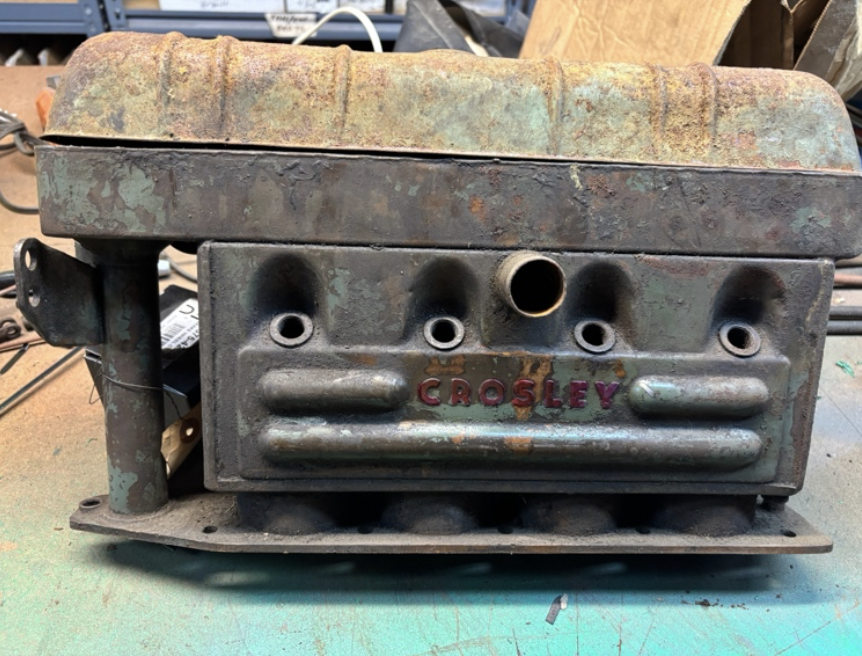
Crosley Engine 1 Tin Block (COBRA)
On the first Crosley Engine, the tin block, the Crosley emblem is in the center of the block. These early post WWII engines, although known for being extremely light (about 70 lbs.) were known for acquiring small pin hole leaks due to corrosion from antifreeze and other coolants.
Crosley Engine 2 (Conversion Block)
The second block has the Crosley emblem up top of the block to left hand side and the emblem is pushed back. This was the conversion block. It was what Crosley sold you when your tin block rotted out. (Hot Rodders like theses blocks because the base where the bolt to the engine case is thinner to compensate for the tin block and it gives you more compression.)
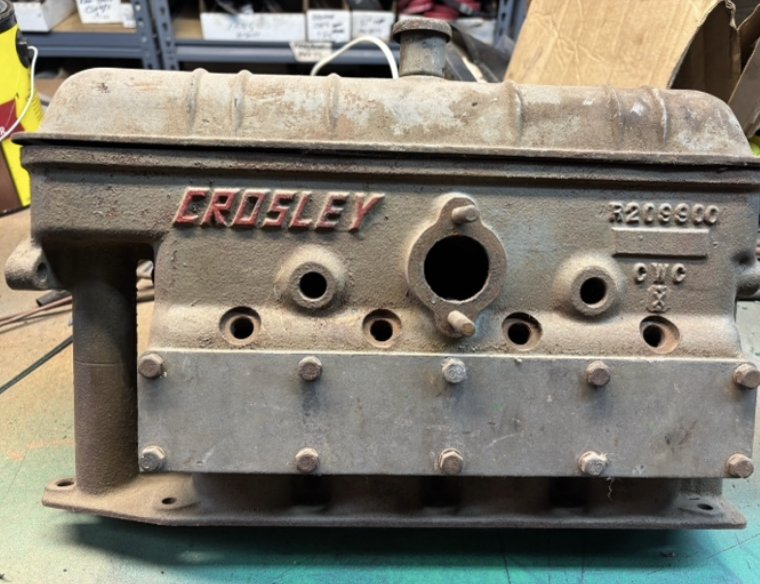
Crosley Engine 3 Cast Iron Block (CIBA)
This was the production block that replaced the tin block. It can be identified by the location of the Crosley emblem at the top, to the left, and all the way forward.
6) What type of brakes does the Crosley have?
Over the years, Crosley have had 3 different brake types. Mechanical, Hydraulic, and Disc (Disc 1949 only corrosion, etc.)
6) What type of brakes does the Crosley have?
Over the years, 1946-52, Crosleys have had 3 different brake types.
Mechanical Brakes(1939-48 except 1949-50 VC Disc)
The thing you need to know about these are the bigger the leg you have the faster you will stop. Plan your stops!!! Once you learn how to adjust them, they are adequate – not great.
Mechanical Brake Drum
Hydraulic Drum (1950-52)
A great improvement from the mechanical brakes and appeared on Crosleys from 1949-52. It’s been said, “You could stop on a dime, and “It will give you back two nickels!”
Hydraulic Brake Drum
Disk Brakes
These were 4-wheel disks only produced for a short time in 1949 and some of 1950. They tended to corrode and leak and were replaced with hydraulic shoe
A Final Word…
We cannot guarantee these questions will eliminate all problems. We just hope these “phone call tips” can help you when calling on your Crosley. No “classic car” is ever perfect when purchased. The goal is to help you minimize big mistakes especially for the Crosley brand.
Upcoming programs we will highlight Crosley information for those of you who want to Buy a Crosley.
√ Assessing Your Crosley Onsite – The Exterior and Interior
√ Towing Your New Crosley Home
Please share our link on CaptivatedbyCrosley.com, FaceBook, Instagram and other social media with others. Pass our information around. Again, please get “Captivated” and Stay “Captivated” by Crosleys!
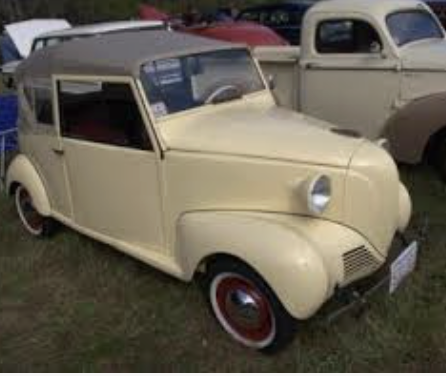
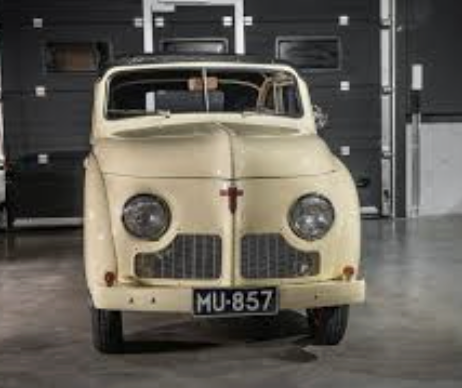
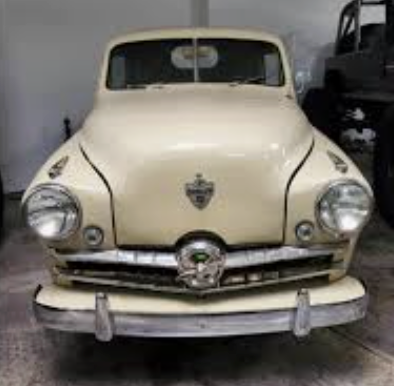
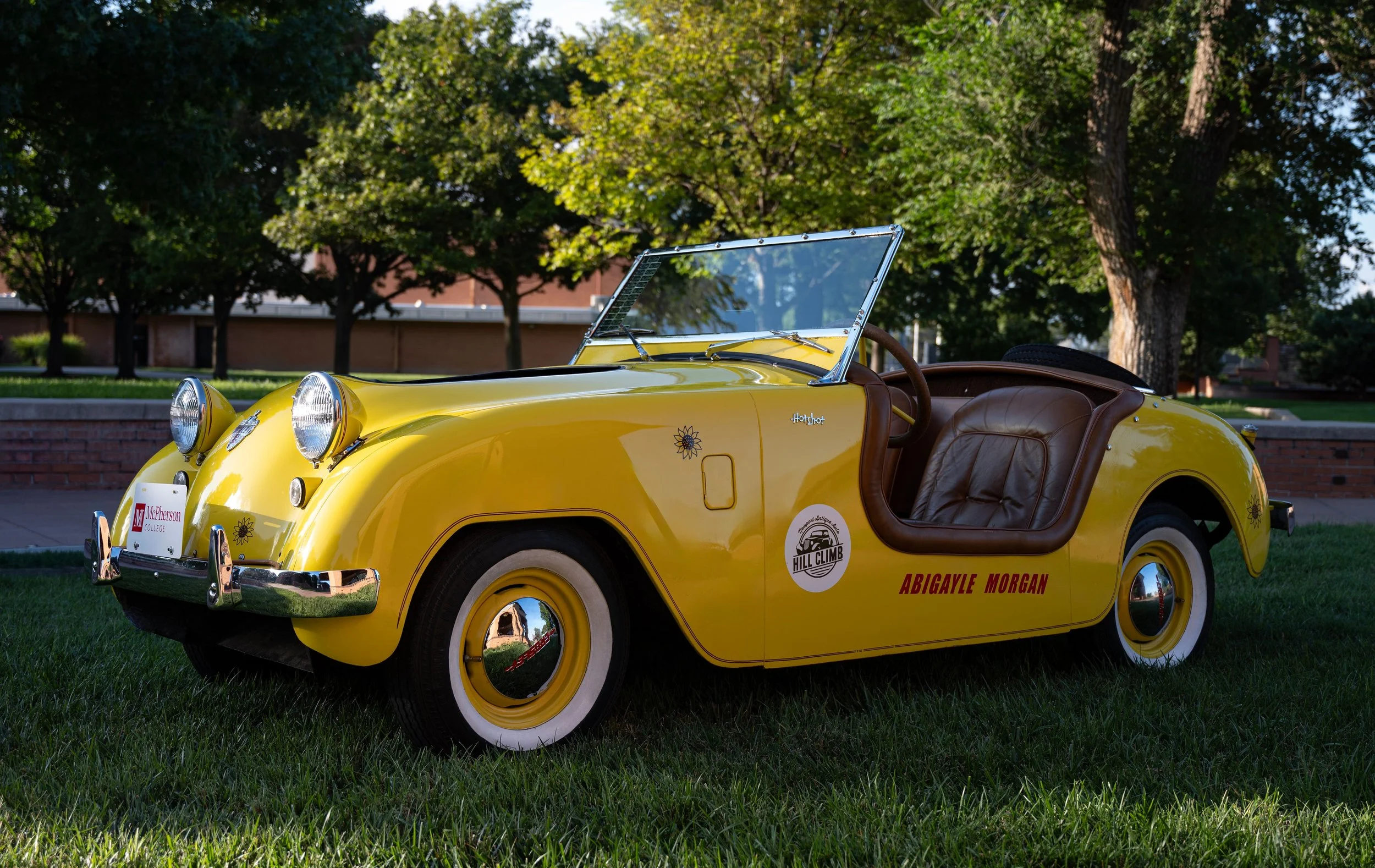
Aby’s classic Crosley ride…