Comparing Crosley Cousins
The Skorpion and the Panda
Two fascinating Crosley-derivative autos emerged in the late 40s and the early 1950’s, the Skorpion and the Panda. These cars developed with one, the Skorpion, initiated before Crosley’s demise in 1952, and the other, Panda post 1952. (See earlier Captivated by Crosley, A Panda Survivor, Parts I & II). based on an attempt to renew Crosley production. The drive train and chassis were used from Crosleys Hotshot/Super Sports for both of these autos development.
Skorpion/Panda - Why Crosley was such a good donor
Although the rationale for using the Crosley were different for each project, the Crosley offered ideal components for small car development. These included:
Short 80-inch-wheelbase chassis
Crosley four-cylinder engine
transmission
rear axle
suspension
steering
brakes
wheels and running gear
Lightweight (approximately 1,050 lbs.)
Skorpion – Panda Early Development
The Skorpion grew directly out of the postwar enthusiasm for lightweight sports cars. Ralph Roberts and John Wills (Skorpion founders) were experimenting with fiberglass technology around 1949. Although initially they used a rear-mounted Indian motorcycle engine, they then decided that the Crosley engine offered a better solution, moved the engine to the front and redesigned the hood. That became the Skorpion. Four early fiberglass bodies were built into complete cars on modified Crosley frames.
The Panda was developed as Crosley motors was ending production. Crosley Motors ended automobile production in 1952. In February 1953, former Crosley dealer Finn S. Hudson and Herzog, Crosley parts distributor, Ed Herzog, established Small Cars, Inc. in Kansas City with the explicit goal of keeping the Crosley production alive.
The Skorpion-Panda Chassis
The Skorpion was designed around the Crosley's approximately 80-inch wheelbase. The 1953 Viking-Craft literature says the stock Crosley chassis could be used with the body with essentially only the necessary lowering modifications. The body was designed around a 42-inch track and 80-inch wheelbase, and the complete car was advertised at approximately 1,050 pounds.
With the Panda, Hudson went much farther with the Crosley Hot Shot/Super Sports chassis. He took its 85-inch wheelbase and shortened it to only 70 inches, a major modification. Then, he installed his first fiberglass Panda body in approximately autumn 1954. So, Hudson wasn't simply duplicating the Crosley chassis dimensions for his Panda, he was re-engineering the Crosley chassis for a new(er) automobile.
Overall Body Design
Interestingly, the Skorpion and the Panda grew from a similar emerging American post-war appetite for small and even sportier cars. The Crosley surprisingly played a central role in each in addition to originally adopting the engine and drivetrain.
The Skorpion
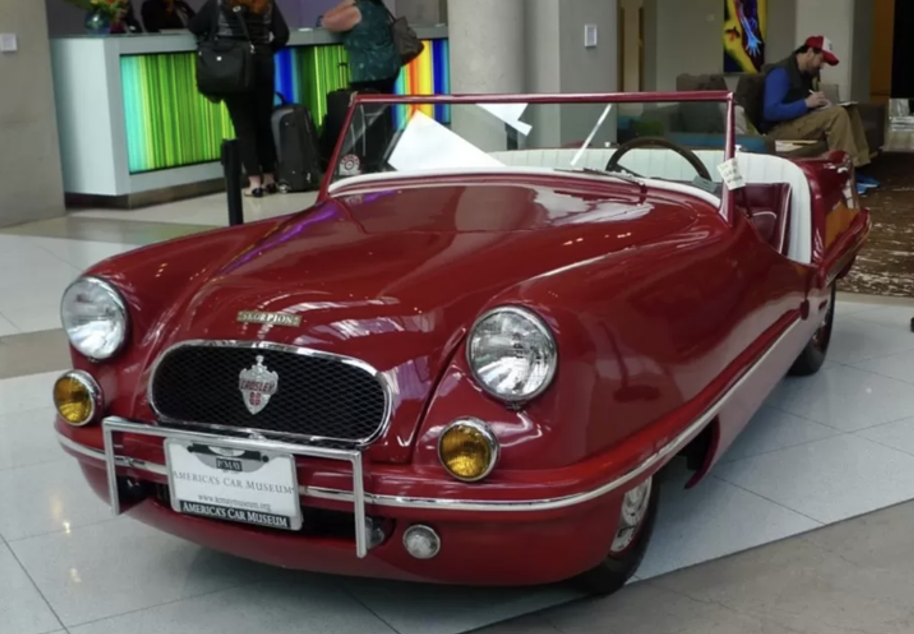
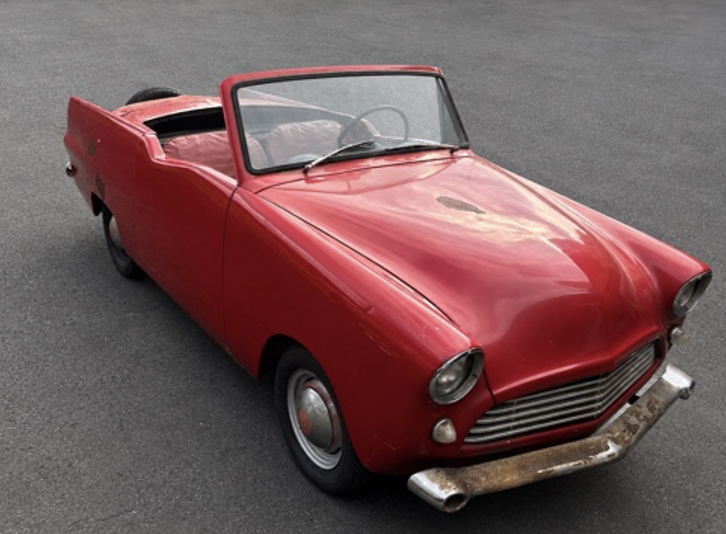
The Skorpion was deliberately low, sleek, with rounded features, somewhat modeling miniature European sports cars of the era.
The Panda
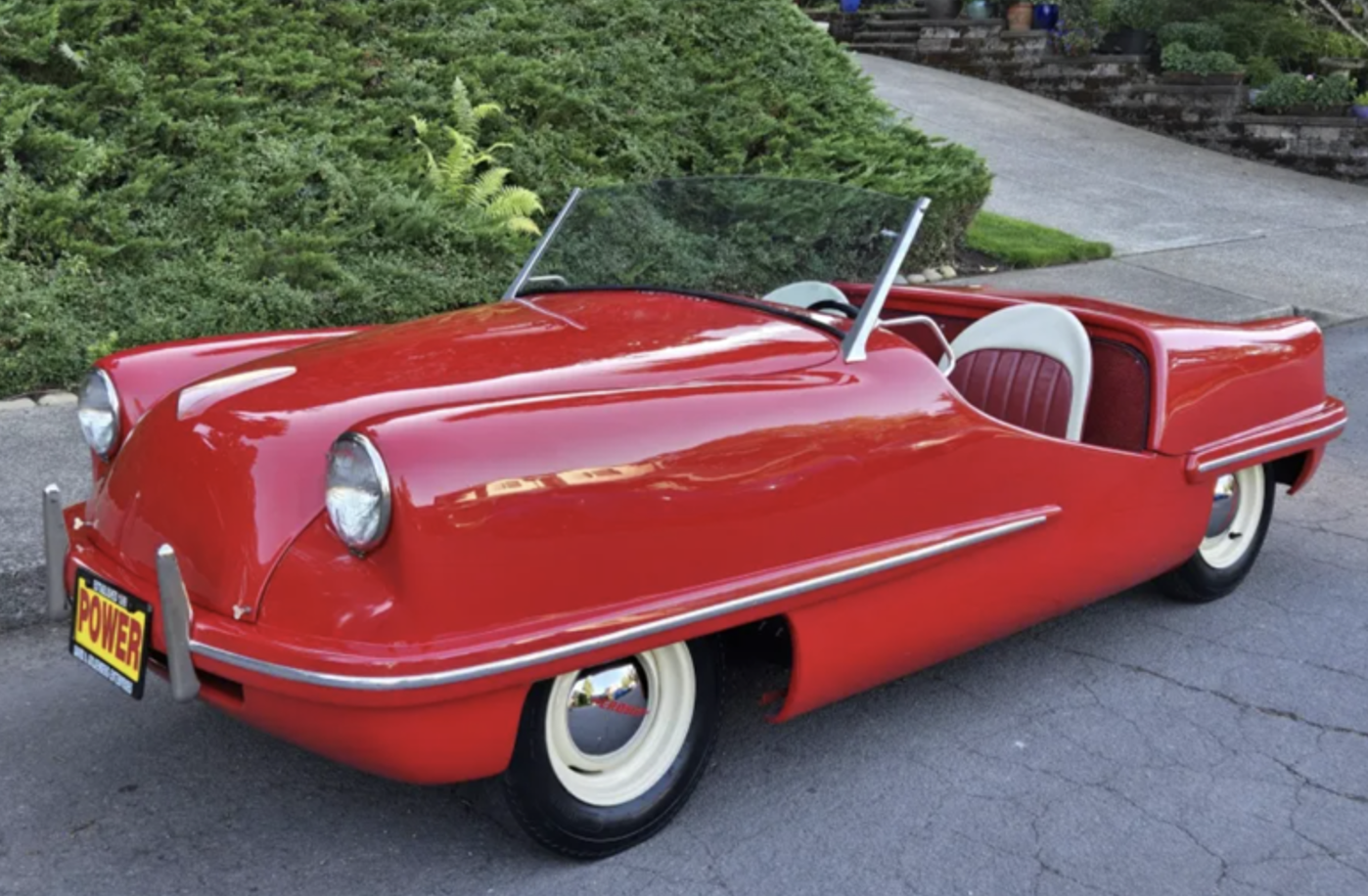
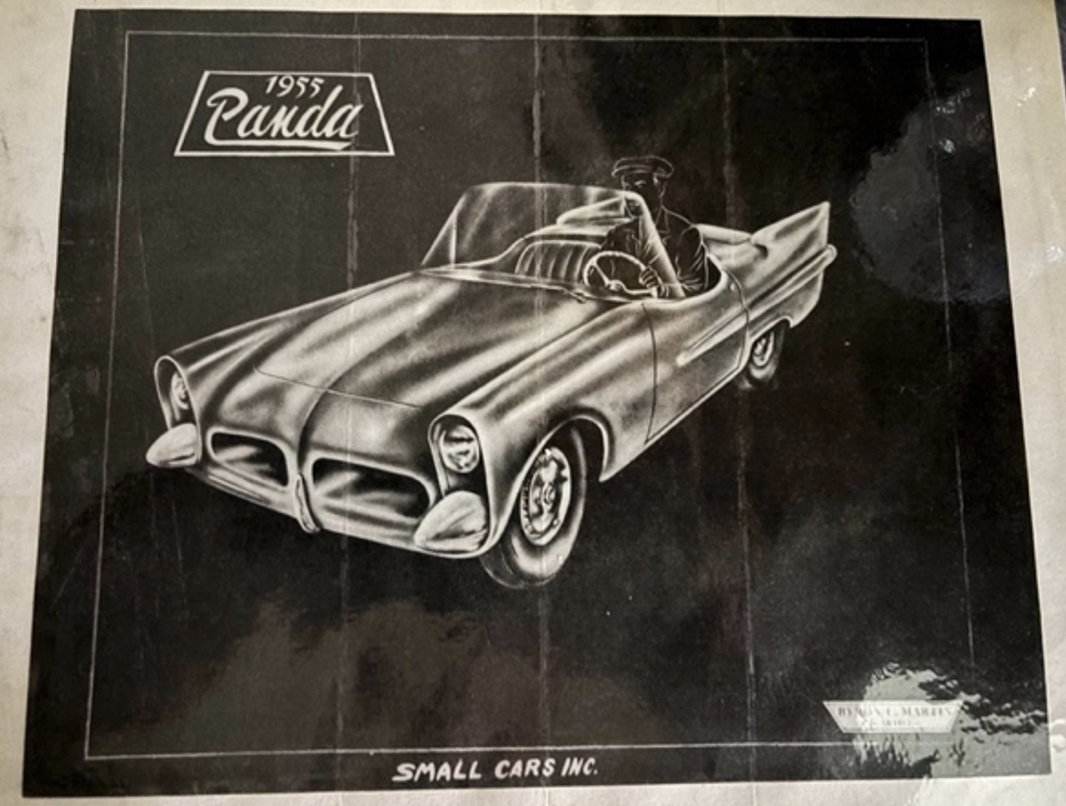
Although the early Panda design was surprisingly futuristic, the first published illustration showed a more rounded body with:
a long smooth hood
bullet headlights
enveloped wheels
a rounded rear
low-cut sides
an unusual bumper treatment
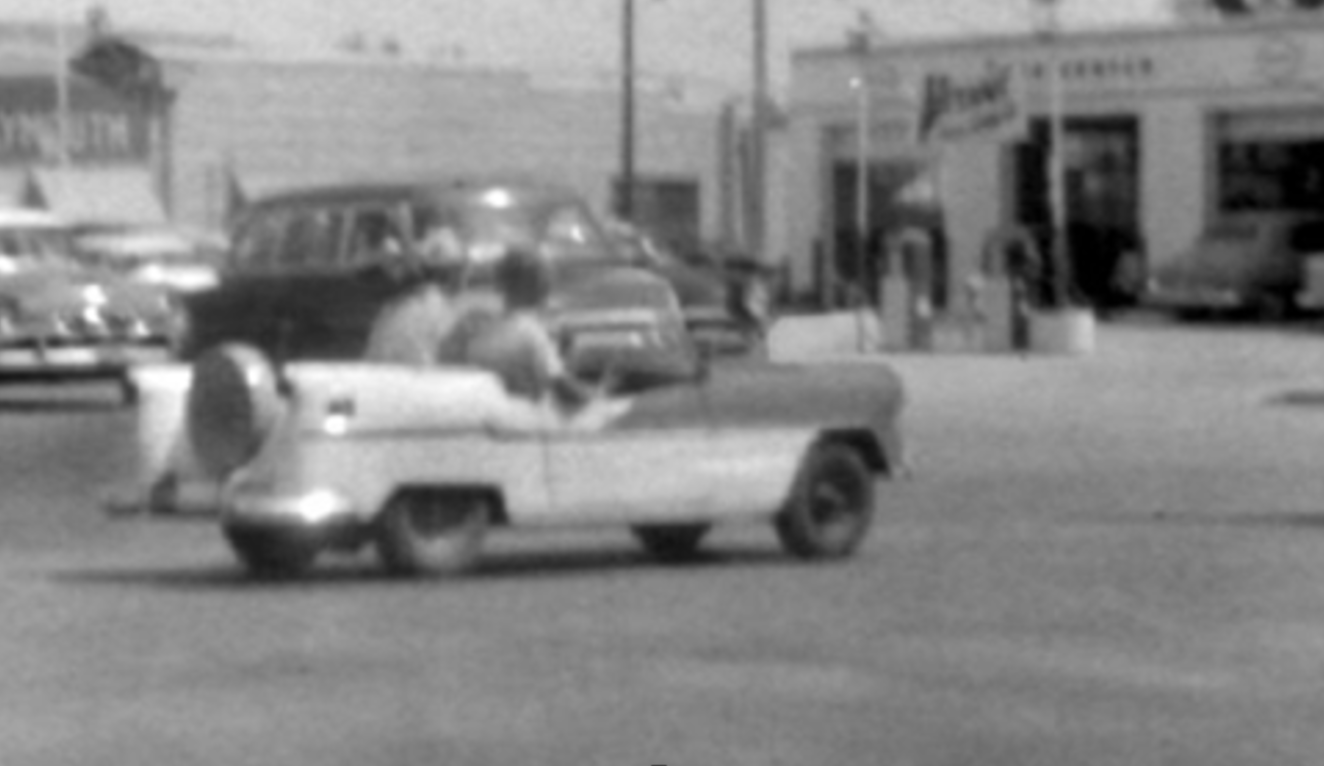
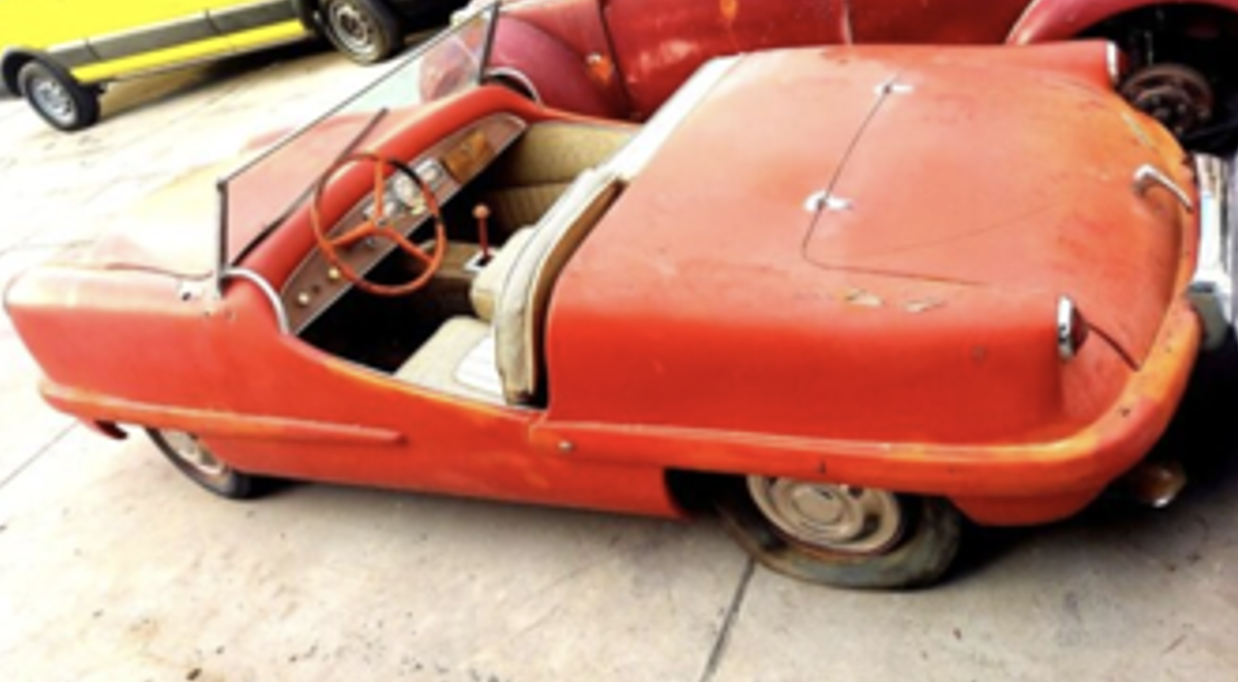
However, by autumn 1954 the actual Panda prototype had become a much more traditional roadster including:
tall vertical/louvered grille
two-piece windshield
conventional front fenders
small rear fins
two-passenger cockpit
Skorpion/Panda Development Comparison
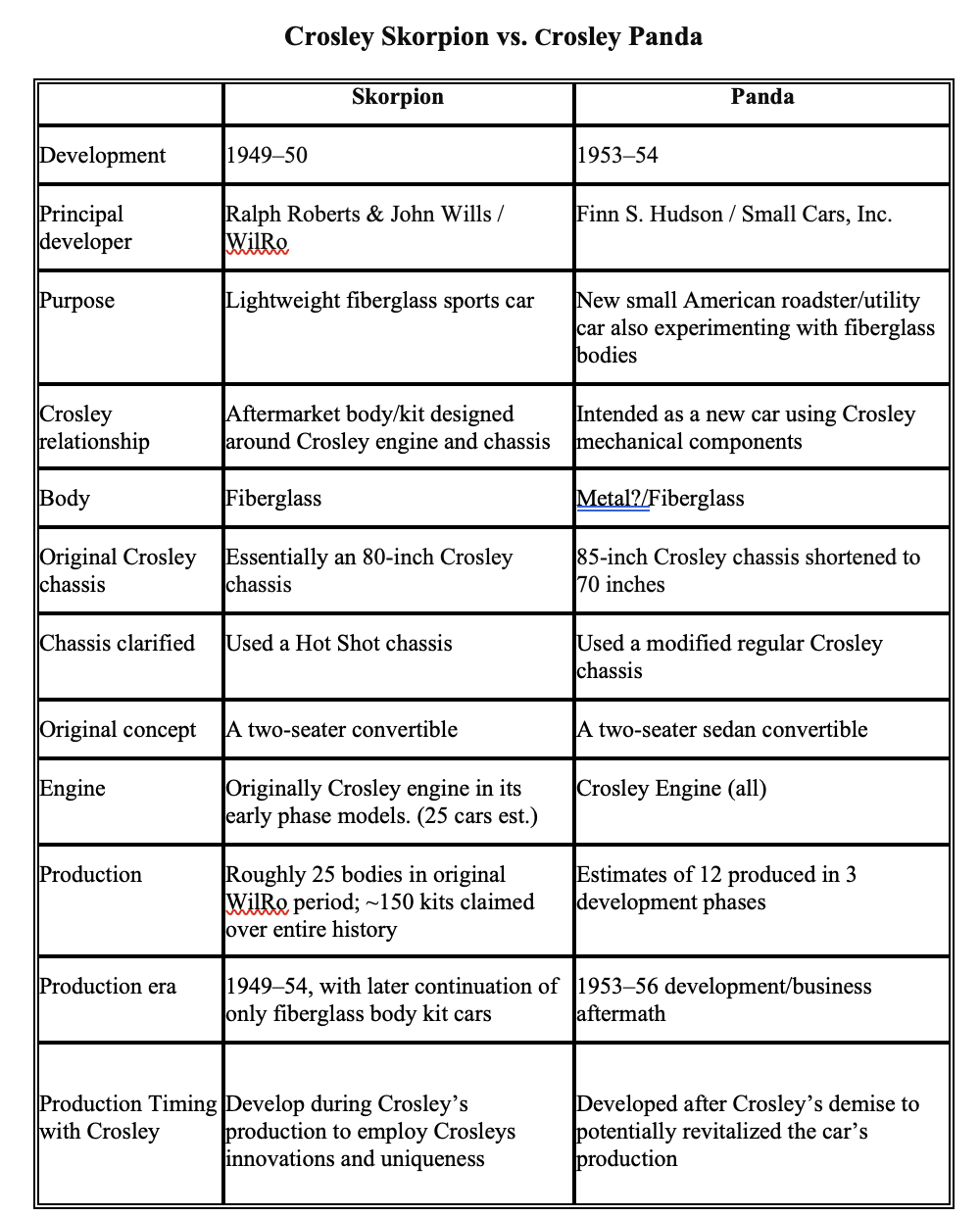
Below is a chart comparing the background and development of both the Skorpion and Panda automobiles. Striking similarities, in spite of their companies differing motives, existed between the two car manufacturers.
Summary
In general, the low production Skorpion and Panda autos enriched the auto industry and especially expanded Crosleys footprint within the mid-century automobile community. Although not financially successful, their contributions included early adoption of fiberglass technology, expanded applications of Crosley’s efficient drive train in a lightweight auto, and introduced exciting innovations in a rapidly evolving post-war design environment.
References
Crosley Owners Bulletin. January–February 1955.
Crosley Owners Bulletin. May–June 1955.
Crosley Owners Bulletin. January–February 1956.
Ed’s Dispatch—Captivated by Crosley Newsletter. June 2026.
Ed’s Dispatch—Captivated by Crosley Newsletter. July 2026.
Hacker, Geoff, et al. Fiberglass-history research -
The "Forgotten Fiberglass" Monograph Project) unpublished est. 1950.
Motor Trend. April 1952.
Motor Trend. August 1952. Report on Viking-Craft.
Original Panda brochure (c. 1955). Owner's collection.
Viking-Craft. Skorpion brochure. 1953.
WilRo. Promotional material, 1951–1952.